
Are Non-Toxic Sensory Toys for Toddlers Worth It?
Last Updated: November 8, 2026
Quick Summary
Non-toxic sensory toys for toddlers are worth it when they are verified by independent testing, not just labeled non-toxic, since the term is a claim rather than a regulated category. Ask sellers for a Children's Product Certificate confirming third-party testing for lead, phthalates, and small-part hazards, and match the toy to your child's developmental stage.
A Children's Product Certificate confirms third-party testing for lead, phthalates, and small-part hazards.
Skip pieces under 1.25 inches, the CPSC small-parts threshold for children under three.
Food-grade silicone must be labeled food-grade, not just silicone, to count as verified.
Fabric toys with buttons and fasteners need adult supervision until mouthing stops.
Inspect seams, fasteners, and finishes monthly, since loose buttons are a choking hazard.
Which sensory toy fits your toddler?
Handcrafted, US child safety certified sensory games for ages three and up.
Table of Contents
What Counts as Non-Toxic: Materials and Certifications That Matter
Non-Toxic Sensory Toys for 2-Year-Olds: Matching Toy to Developmental Stage
Non-Toxic Sensory Toys for 3-Year-Olds: Building Fine Motor and Pretend Play
Non-Toxic Sensory Toys for Toddlers With Autism: Calming and Predictable Options
Non-Toxic Toys for Sensory Play: A Quick Comparison by Material, Care, and Durability
What Counts as Non-Toxic: Materials and Certifications That Matter
Non-toxic sensory toys for toddlers are products made without lead, phthalates, BPA, or other harmful substances at levels a child could absorb through mouthing or handling, and verified by independent testing. At Witzkan, we sew our sensory games from soft American flannel and hold a Children's Product Certificate. But "non-toxic" gets printed on a lot of packaging that hasn't earned it, so here's how to read the label honestly, and what the label can and cannot prove.
Non-toxic is a claim, not a regulated category. No single federal seal certifies a toy as "non-toxic" for all children in all situations. What exists instead is a set of required tests and disclosures that establish specific limits for specific hazards. Understanding that distinction is the difference between trusting a word and trusting a test.
Reading Material Labels: Wood, Rubber, Silicone, and Fabric
Four material families dominate the toddler shelf, and each has its own red flags and its own verification path.
Wood: Look for unfinished hardwood or water-based, lead-free finishes. Painted wood from unknown sources is where heavy metals hide, because older or imported paints may contain lead or cadmium. A water-based finish should be named on the label or in the product listing; "natural finish" alone tells you nothing.
Natural rubber: Should be PVC-free and free of synthetic softeners such as phthalates. Rubber balls and teethers are the common forms. Natural rubber may carry a faint latex smell, which is normal; a strong chemical odor is a sign of synthetic fillers. Children with a known latex allergy should avoid natural rubber entirely, and that is a medical conversation, not a label-reading one.
Food-grade silicone: Must be labeled food-grade, not just "silicone." Cheap silicone often carries fillers that can leach when chewed. Food-grade silicone is typically platinum-cured, which is why it holds up to dishwashing and repeated mouthing. If a listing says only "silicone" with no grade, treat it as unverified.
Fabric: Soft flannel is the fabric Witzkan uses for its sensory games. Check dye safety, not just fiber content, when comparing fabric toys.
A fifth category deserves its own warning: recycled or reground plastics. They can be safe, but they require the same testing as virgin plastic, and a "recycled" label is not a safety claim.
Safety Certifications and What They Verify
In the United States, children's products fall under Consumer Product Safety Commission rules, and the CPSC guidance on children's product certification explains what a Children's Product Certificate actually covers.
What a certificate does not do is certify the toy as safe in every situation. It does not cover how the toy holds up after months of chewing, whether a seam will split, or whether a button will loosen.
Ask for the certificate. Reputable makers publish it or send it on request. For a step-by-step way to confirm a certificate is real, our guide on how to verify child safety certifications walks through the checks.
Watch out: a certificate that names a different model number, a different factory, or a date years before the toy you're holding tells you the paperwork exists but not that it covers your toy. Match the certificate to the product in front of you.
Non-Toxic Sensory Toys for 2-Year-Olds: Matching Toy to Developmental Stage
Two-year-olds learn through their mouths and hands, so the right toy is one they can safely mouth, grip, and drop. At this age, texture matters more than complexity.

What works at two: chunky wooden puzzles with rounded edges, natural rubber teethers, soft fabric crinkle toys, and large sensory balls. Skip anything with small parts, loose beads, or pieces under 1.25 inches, which is the standard small-parts threshold the CPSC uses to flag choking hazards for children under three.
A common mistake is buying ahead. A toy built for a four-year-old frustrates a two-year-old and ends up ignored. Match the toy to what the child can already do, then stretch slightly.
Non-Toxic Sensory Toys for 3-Year-Olds: Building Fine Motor and Pretend Play
Three-year-olds shift from mouthing to manipulating, which opens up buttons, snaps, zippers, and pretend play. This is the age where fine motor skills take off through repeated, self-directed practice.
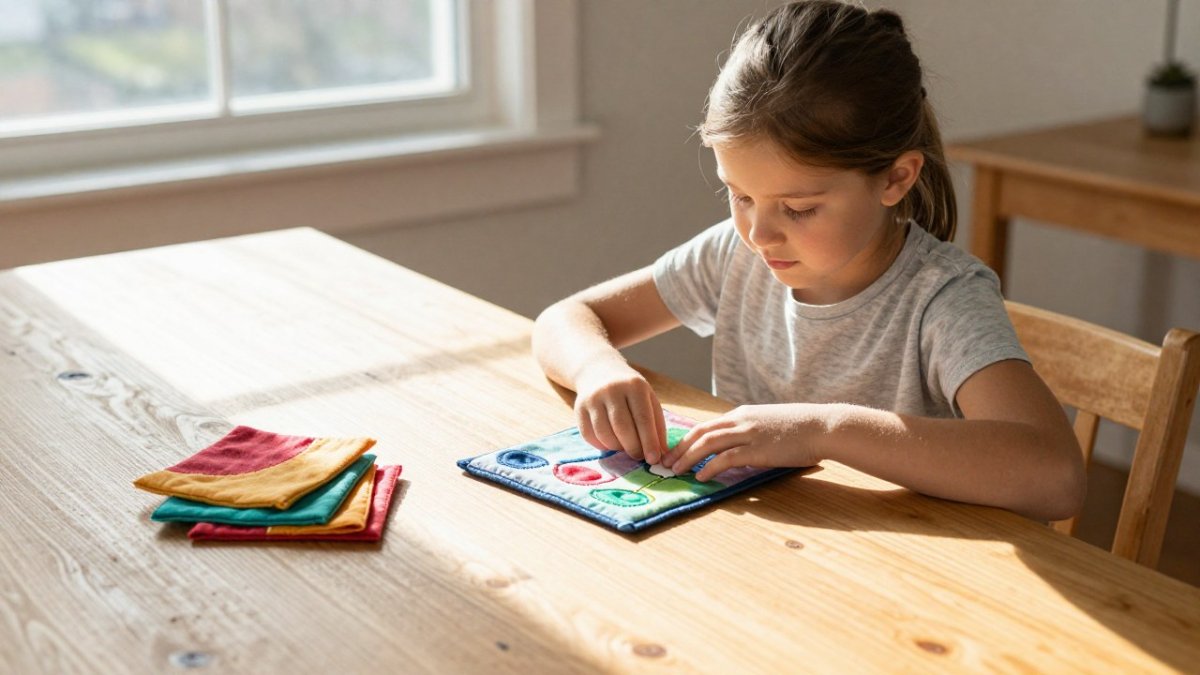
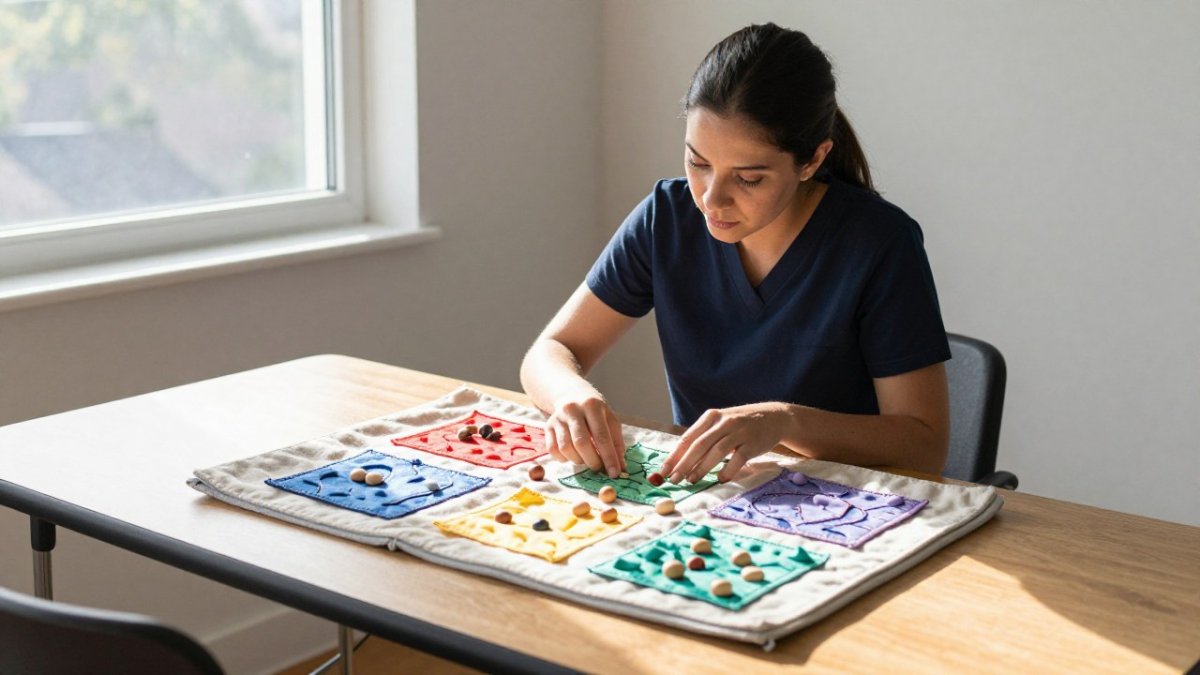
Witzkan's sensory games are designed for inclusive play from ages three to 103, supporting finger dexterity and learning colors, shapes, and names. Because the same game can be enjoyed across generations, it is a lasting addition to play time.
For a deeper look at which sensory toys best support fine motor development at this age, our sensory toys for fine motor development guide breaks down the options by skill.
Non-Toxic Sensory Toys for Toddlers With Autism: Calming and Predictable Options
Toddlers with autism often respond best to toys that offer steady, predictable tactile input with no sudden sounds or flashing lights. Calm beats stimulating here.
Choose toys with consistent textures and soft fabric elements, and a clear beginning and end to the play. Avoid battery-powered toys with unpredictable noises, which can overwhelm a child who is already regulating hard.
For parents of tactile-sensitive toddlers, our guide to sensory toys for children with tactile sensitivities covers options tailored to specific sensitivities. Pairing a calming toy with a quiet routine helps more than adding more toys. If you want activity ideas to pair with the toys, our list of calming activities for sensory processing disorder gives you a starting point.
Non-Toxic Toys for Sensory Play: A Quick Comparison by Material, Care, and Durability
Non-toxic toys for sensory play vary widely in how they hold up, how you clean them, and what they cost over their useful life. Most roundups list products without a consistent way to compare them. This one uses the same five criteria for every category, material and finish, cleaning method, expected durability, typical price range, and best use, so you can weigh trade-offs instead of guessing from photos.
Toy Type | Material and Finish | Cleaning | Expected Durability | Typical Price Range | Best For |
Wooden puzzles | Hardwood, water-based lead-free finish | Wipe with damp cloth; dry immediately | Several years; hand-down quality | $15-$40 | Problem-solving, ages 2+ |
Natural rubber toys | PVC-free rubber, no synthetic softeners | Rinse, air dry; avoid prolonged sun | 1-2 years with mouthing | $8-$20 | Teething, bath play |
Fabric sensory games | Soft flannel, cotton, low-impact dyes | Spot clean or gentle wash, air dry | Several years with care | $25-$60 | Fine motor, calming play |
Silicone teethers | Food-grade, platinum-cured silicone | Dishwasher safe, top rack | 1-2 years | $6-$15 | Mouthing, ages 0-2 |
Sensory balls | Rubber or fabric, textured surface | Wipe or wash depending on material | 1-2 years | $10-$30 | Gross motor, tactile input |
How to Compare Beyond the Table
Cleaning method matters more than most listings admit. Fabric with buttons and fasteners should be spot cleaned unless the maker confirms machine washing won't loosen the hardware. If a listing doesn't state a cleaning method, assume the gentlest one and check with the seller.
Check toys regularly for wear. For fabric, look for seam separation and loose buttons. A toy that shows these signs should be retired, regardless of its age grade.
Sensory Play Ideas Using Each Toy Type
Sensory play works well when you use a toy as intended and then add one small twist.
Fabric sensory games: Take turns fastening buttons and naming textures by feel with eyes closed.
The twist matters more than the toy. A single board used five different ways beats five toys used one way each.
Toy Safety by Age and Play Behavior: What to Watch For
Toy safety depends as much on how a child plays as on the toy itself. A toy that's safe for one toddler can be a hazard for another, so watch the behavior, not just the age on the box.
Mouthing: Still common at two. Avoid small parts and check for loose pieces.
Throwing: Toddlers throw. Choose soft materials and avoid hard edges.
Supervised play: Fabric toys with buttons and fasteners need an adult nearby until the child stops mouthing them.
Wear checks: Inspect seams, fasteners, and finishes monthly. Loose buttons are a choking hazard.
Watch out: a toy can wear over time, and a seam can split or a button can loosen. Check before play sessions, not just at purchase.
Choosing Your First Non-Toxic Sensory Toy
Start with one toy that matches your child's current stage, then add as you learn what they reach for. A two-year-old needs mouth-safe, chunky options. A three-year-old is ready for buttons and pretend play. A child with sensory sensitivities needs calm, predictable textures above all.
If you're ready to browse, our full collection of sensory toys lets you pick your first non-toxic sensory toy by age and need. Every Witzkan game is handcrafted in Saegertown, Pennsylvania, sewn from soft American flannel, and US child safety certified.
The hardest part of choosing non-toxic sensory toys for toddlers isn't finding options. It's finding one that's actually certified, actually durable, and actually fits your child's stage. Witzkan builds handcrafted sensory-tactile games from soft American flannel, designed for inclusive play from ages three to 103, and US child safety certified. Our games support memory, coordination, and finger dexterity while giving children a calming tactile experience.
Frequently Asked Questions
What are the safest sensory toys for toddlers?
The safest options use materials with clear safety documentation: solid wood with water-based finishes, natural rubber, food-grade silicone, and organic cotton. Look for toys labeled PVC-free and phthalate-free, and check that small parts are securely attached. For children under three, avoid anything with loose pieces that fit inside a toilet paper tube, since that signals a choking hazard. Witzkan's flannel sensory games are US child safety certified.
How can I tell whether a toddler toy is non-toxic?
Start with the label and the packaging: a toy marketed as non-toxic should name its materials and list any safety certifications. For wooden toys, look for water-based or plant-based finishes rather than unknown paints. You can also ask the seller for documentation of its US child safety certification. If a listing makes vague claims with no material details, treat that as a reason to keep looking.
Are wooden toys safer than plastic sensory toys?
Wooden toys are not automatically safer, but solid wood with a documented non-toxic finish avoids the concerns some parents have about soft PVC plastics and phthalates. The key is the finish: water-based paints and natural oils are the options to look for. Plastic toys can be perfectly safe when they are labeled PVC-free and phthalate-free. Whichever material you choose, check for splinters, loose joints, and chipped paint, and retire any toy with exposed edges or peeling coating.
What are good sensory toys for autistic toddlers?
Many autistic toddlers respond well to toys with predictable, controllable input: soft fabric textures, natural rubber balls, and simple wooden puzzles with clear shapes. Avoid toys with sudden noises, flashing lights, or strong smells unless your child already seeks them out. Offer one toy at a time and let the child lead the play. Occupational therapists often recommend tactile games that can be squeezed, sorted, or matched, since these give repeated, calming input and support fine motor skills without overwhelming the senses.
What should I avoid when choosing sensory toys for toddlers?
Skip toys with loose small parts, button batteries, magnets, or long strings, all of which pose choking or strangulation risks for children under three. Avoid heavily scented toys and anything with peeling paint or unknown finishes. For bath toys, check that the material is PVC-free and that water can drain fully, since trapped water can grow mold. Finally, avoid toys that require constant adult assembly or repair, because a toy that breaks easily often becomes a hazard.

Comments