
Sensory Toys for Children With Tactile Sensitivities
Last Updated: October 23, 2026
Quick Summary
Sensory toys for children with tactile sensitivities work best when touch is introduced at a pace the child controls, a principle occupational therapists call graded exposure. Soft flannel games, smooth stress balls, and graded therapy putty are gentle starting points, while textured balls and kinetic sand suit children who seek input.
Witzkan flannel games are handcrafted in Saegertown, Pennsylvania from American flannel and carry US child safety certification.
Start with the softest therapy putty and let a child squeeze it inside a bag if direct contact is too much.
Dry fillers such as rice or beans work as a first step for children who reject wet or sticky textures.
Roll a textured ball across a sleeve, blanket, or sock foot before bare skin so the child can retreat.
Watch for three signals over two to three weeks: unprompted approach, longer sessions, and staying regulated afterward.
Table of Contents
How Tactile Sensory Toys Help Children With Tactile Sensitivities
1. Witzkan: Soft Flannel Games for Gradual Tactile Exposure
5. Calming Sensory Toys for Regulation and Stress Relief
6. Fidget Toys for Kids Who Need Movement While They Focus
7. Sensory Toys for Sensory Processing Disorder: Matching Toys to Your Child
A gradual-exposure sequence for tactile defensiveness
How to tell whether a toy is helping
Sensory-friendly alternatives and opt-out options
Safety and supervision
Cleaning, durability, and material sensitivities
Frequently Asked Questions
How Tactile Sensory Toys Help Children With Tactile Sensitivities
Tactile sensitivities change how a child experiences touch. This guide from Witzkan covers sensory toys for children with tactile sensitivities, from soft flannel games to therapy putty, and explains how to match each toy to a child's specific touch profile rather than guessing.
The core principle is straightforward: tactile input should be introduced at a pace the child controls. Occupational therapists call this graded exposure, and it works best when the toy itself invites touch without demanding it.
Below, we break down seven categories of tactile sensory toys, what each one does well, and where it falls short. We also cover safety, cleaning, and how to tell whether a toy is actually helping.
Key Takeaway Tactile sensitivities are not a preference to be corrected. They are a nervous system difference that responds best to gradual, child-led exposure to texture.
1. Witzkan: Soft Flannel Games for Gradual Tactile Exposure
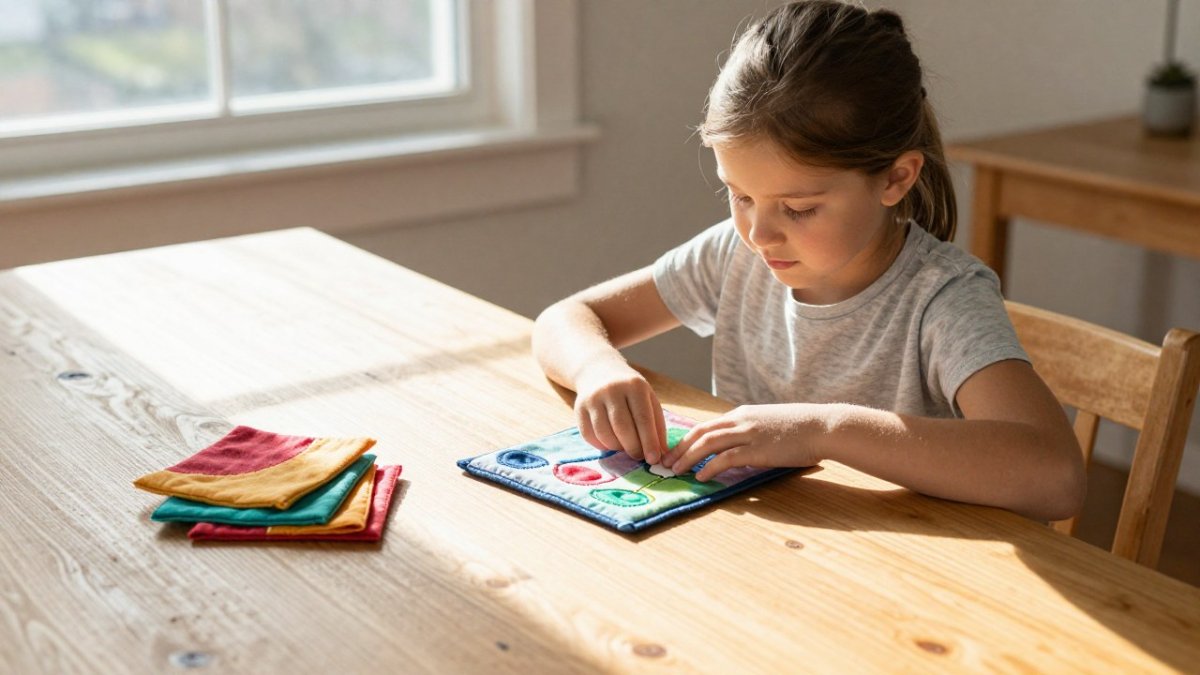
Our top pick for tactile sensitivities is Witzkan because soft flannel lowers the barrier to touch.

What makes Witzkan work for tactile defensiveness is the texture itself. The sewn shapes support color, shape, and name learning, so a session doubles as language practice. Finger dexterity and coordination improve as children manipulate the pieces, and the inclusive design spans ages three to 103, which means siblings and grandparents can join without a separate purchase.
The honest limitation: flannel will not satisfy a child who actively seeks rough or deep-pressure input. Pair it with a textured ball or putty for those days.
(https://www.cpsc.gov/Recalls) small-parts guidance is the reference point: if a toy or its parts fit inside a small-parts cylinder, it is not appropriate for a child under three or any child who still mouths objects.
Material sensitivities deserve a check before purchase.
These toys fit in a backpack, which makes them useful for car rides, waiting rooms, and transitions that tend to trigger dysregulation.
Pro Tip If a textured ball is too much at first, roll it across a sleeve, blanket, or sock foot before bare skin. The texture is the same, but the barrier gives the child a way to retreat without abandoning the toy.
5. Calming Sensory Toys for Regulation and Stress Relief
Calming sensory toys for regulation work on the principle that steady, rhythmic input settles an over-aroused nervous system. Weighted blankets, sensory swings, and vibration tools fall into this group, alongside soft flannel and smooth-textured manipulatives.
Movement-based input matters here too. A swing or a slow rock provides vestibular feedback that many children find organizing.
The thing nobody tells you about calming tools is that timing beats intensity.
6. Fidget Toys for Kids Who Need Movement While They Focus
Fidget toys for kids serve a different job than calming tools: they absorb restless movement so attention can stay on the task at hand.
The best fidget is quiet and unobtrusive. A clicker or a noisy toy defeats the purpose in a classroom.
A common mistake is treating a fidget as a reward. It is a tool, and children should be taught to use it without drawing attention.
7. Sensory Toys for Sensory Processing Disorder: Matching Toys to Your Child
Sensory toys for sensory processing disorder only help when they match the child's profile. Two children with the same diagnosis can have opposite needs: one avoids light touch and craves deep pressure, the other seeks out every texture in reach. The table below is a starting point, not a diagnosis, use it to pick a first toy, then adjust based on what you observe.
Child's Pattern | What to Try First | What to Avoid |
Avoids light touch, craves deep pressure | Soft flannel games, smooth stress balls, weighted items | Feathery or scratchy textures, light tickling |
Seeks constant tactile input | Textured balls, kinetic sand, water beads (5+) | Smooth, low-feedback toys |
Sensitive to messy textures | Dry fillers, flannel, sealed putty bags | Wet sand, slime, finger paint |
Needs movement to focus | Pop tubes, stretchy snakes, fidget switches | Toys that require sitting still |
A gradual-exposure sequence for tactile defensiveness
Most product lists stop at the table. The harder question is how to offer a texture to a child who avoids it without triggering a meltdown. The principle occupational therapists call graded exposure works best when the child controls the pace and can retreat at any point. A practical sequence looks like this:
Proximity without contact. Place the toy on the table near the child and let them look, circle it, or ignore it. No prompt to touch.
Indirect contact. Roll the toy across a sleeve, a blanket, or a sock foot. The child gets the texture through a barrier and can stop at any time.
Brief direct contact. Touch the toy to the back of the hand or forearm for a second, then withdraw. Let the child repeat or refuse.
Child-led exploration. Leave the toy within reach and let the child decide when and how to touch it. Praise approach, not duration.
Add one new texture at a time. Do not introduce a second texture until the first is tolerated without distress, which may take days or weeks.
A common pattern is that progress is not linear: a child may accept a texture one day and refuse it the next. That is normal. Back off to the previous step rather than pushing through, and keep sessions short, a few minutes is often enough.
How to tell whether a toy is helping
Watch for three signals over two to three weeks: the child approaches the toy without prompting, sessions lengthen, and the child stays regulated afterward and can return to the previous activity. A fourth signal is recovery time, how quickly the child settles after a texture they dislike. If avoidance increases, back off and try a gentler texture. An occupational therapist can assess tactile defensiveness formally and build a progression plan; guidance from the American Occupational Therapy Association explains what pediatric evaluation involves.
Sensory-friendly alternatives and opt-out options
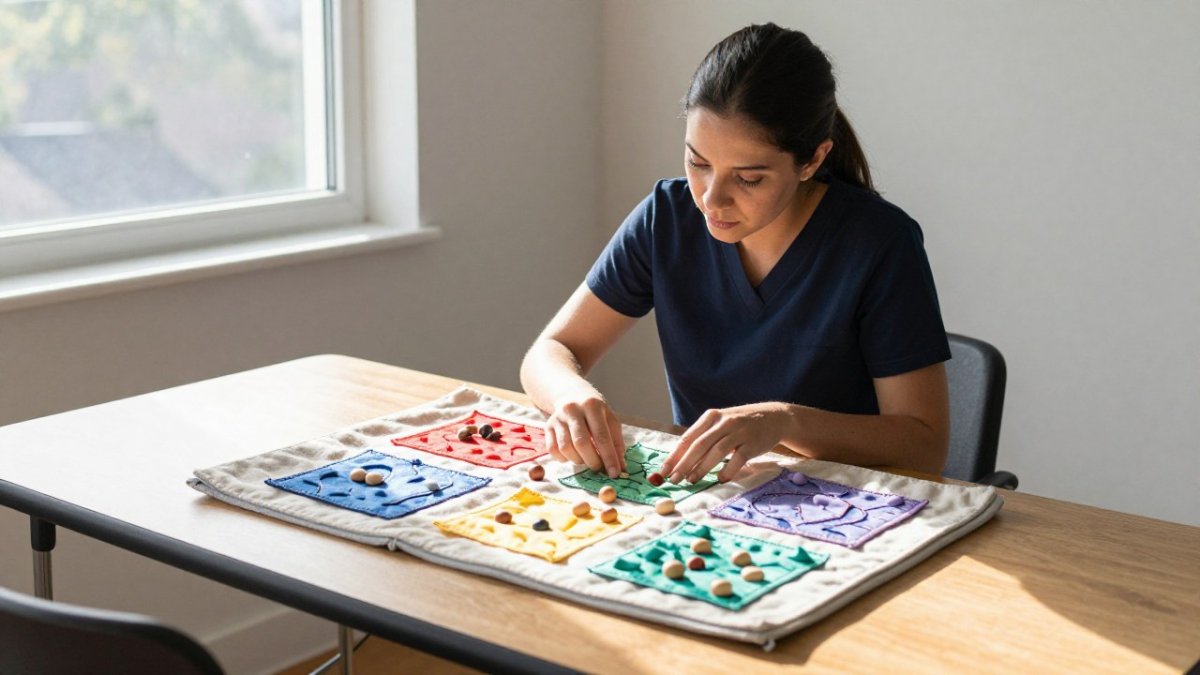
For children who dislike sticky, wet, rough, or unpredictable textures, offer a low-intensity alternative rather than forcing exposure. Dry fillers such as rice or beans can replace wet sand; a sealed bag of putty can replace loose putty; a smooth flannel game can replace a scratchy textured toy. Let the child opt out without consequence, the goal is comfort and engagement, not compliance.
Safety and supervision
Safety deserves its own check. U.S. Consumer Product Safety Commission recalls and small-parts guidance apply to every toy on this list, and any toy with beads, magnets, or small pieces needs supervision. Water beads in particular expand significantly when swallowed and have caused serious injuries in young children; keep them away from any child who still mouths objects. Check toys regularly for cracks, loose seams, and worn surfaces, and remove anything that is shedding or breaking.
Cleaning, durability, and material sensitivities
Cleaning matters for children with material sensitivities. Flannel washes on a gentle cycle, hard plastic and rubber balls wipe clean with mild soap and water, and putty should be replaced when it picks up lint or hair. Check labels for latex and fragrance, since both are common triggers. Durability varies by material, inspect seams, plugs, and joints regularly, and retire any toy that is cracking or losing pieces.
Frequently Asked Questions
What are tactile sensory toys?
Tactile sensory toys are objects made to be explored by touch: soft flannel games, textured balls, therapy putty, kinetic sand, and fabric swatches. They give children controlled tactile input so they can practice tolerating different textures without feeling overwhelmed. For a child with tactile sensitivities, the goal is comfortable exposure at their own pace, not forcing contact with textures they dislike. Start with one soft, familiar material and add variety only when your child stays relaxed.
How do I choose a sensory toy if my child dislikes certain textures?
Start with the texture your child already accepts, such as soft flannel or smooth plastic, and build from there. Offer the toy during calm moments, let your child lead, and stop before frustration sets in. Avoid buying a large set of mixed textures at once. A single soft, well-made tactile toy that your child returns to is more useful than a bin of materials that sit untouched. Ask an occupational therapist for guidance if avoidance is severe.
Are fidget toys helpful for children with tactile sensitivities?
Fidget toys for kids can help when the toy's texture is comfortable. Pop tubes, stretchy snakes, and stress balls give hands something to do during focus-heavy tasks, which can support self-regulation. The catch is texture: a sticky or rough fidget may be rejected by a child with touch sensitivity. Test one option at a time, watch whether your child's hands stay relaxed, and keep the fidget available rather than required.
Can a kid have sensory issues and not be autistic?
Yes. Tactile sensitivity and other sensory processing differences appear in children with ADHD, anxiety, developmental delays, and no diagnosis at all. A preference for soft clothing or dislike of messy play does not by itself indicate autism. If sensory reactions interfere with daily routines like dressing, eating, or bathing, a pediatrician or occupational therapist can assess what is happening and recommend supports.
How can I tell whether a sensory toy is actually helping?
Look for changes in daily life, not just during play. Signs a tactile toy is helping include your child reaching for it without prompting, staying with an activity longer, recovering faster after touching an uncomfortable texture, and using the toy to settle before homework or bedtime. Keep a simple note of what you offered and how your child responded for two to three weeks. If nothing changes, try a different texture or ask an occupational therapist.
Explore Our Designs
Add witzkan.com as a preferred source on Google →

Comments