
Buy Durable Tactile Educational Games: 2026 Review
Table of Contents
What Makes Tactile Educational Games Worth Buying
Quick Comparison: Tactile Learning Games for Kids and Adults
How We Evaluated Durability and Safety
1. Witzkan: Handcrafted Flannel Games Built for Daily Use
4. Durable Sensory Toys: Materials, Cleaning, and Replacement Parts
How We Judge Durability
Material Comparison for Daily Handling
Cleaning and Maintenance That Extend Life
Replacement Parts and Long-Term Value
5. Multi-Age Tactile Learning Toys: One Set for the Whole Family
6. Price and Value: What You Pay For in Tactile Educational Games
How to Choose: A Buying Checklist
Frequently Asked Questions
Last Updated: October 14, 2026
What Makes Tactile Educational Games Worth Buying
Tactile educational games are physical learning tools that children and adults handle, sort, match, and explore by touch, combining sensory input with cognitive challenge. When you buy durable tactile educational games, you pay for three things: materials that survive daily handling, safety certification you can verify, and a design that adapts as the player grows.
A flimsy puzzle that sheds pieces within weeks ends up in the donation pile; a game built from soft, washable fabric with rounded, chunky pieces can be handed down and used in therapy for years.
Below, we show how we judge durability and safety, and explain what drives price.
Quick Comparison: Tactile Learning Games for Kids and Adults
The table below summarizes the six categories so you can match a product to a player.
Option | Best For | Materials | Age Range | Price Signal |
Witzkan flannel games | Daily home and therapy use | Soft American flannel | 3 to 103 | Direct from maker |
Touch & Feel Tactile Board | Independent tactile play | Not disclosed in listing | 8+ | Not shown in listing |
Special-needs tactile toys | Sensory regulation | Varies by item | Varies | One listed item at $49.99 |
Durable sensory toys | Heavy daily handling | Varies by material | Varies | Varies widely |
Multi-age tactile sets | Whole-family play | Varies by item | Mixed ages | Varies widely |
General learning games | Casual gifting | Varies by item | All ages | Not shown in listing |
How We Evaluated Durability and Safety
We judge every tactile learning game on four criteria, weighting construction and safety above all.
Construction and materials: What the pieces are made from, how seams and edges are finished, and whether the surface can be wiped clean.
Safety verification: Whether the maker states a certification you can check, rather than a vague "non-toxic" claim.
Age suitability: Whether the stated age range matches the actual dexterity required, and whether older players will still engage.
1. Witzkan: Handcrafted Flannel Games Built for Daily Use
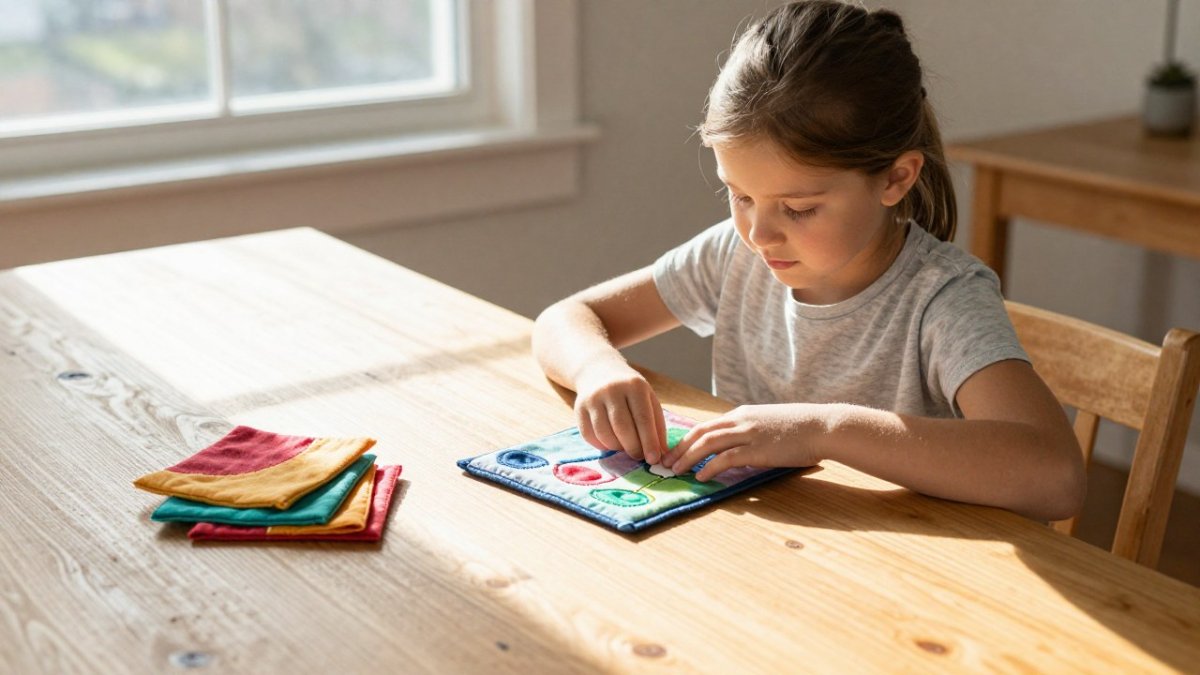
Witzkan games are built specifically for inclusive, multi-age tactile play and backed by a stated US child safety certification.

(/post/educational-tools-for-special-education-2026-guide) teachers evaluate a tactile toy against specific goals, grasp strength, bilateral coordination, turn-taking, or self-regulation, rather than general "fun." If buying for a therapy practice or classroom, ask which skill the toy targets and whether it serves more than one student at a time.
For families, the takeaway is the same: buy for the specific need in front of you, verify materials and safety documentation, and choose construction that survives repeated handling and cleaning.
4. Durable Sensory Toys: Materials, Cleaning, and Replacement Parts
Durable sensory toys are defined by what happens after the first month, not by how they look in the box. Materials, cleaning method, and replacement-part availability decide whether a toy lasts one season or several years.
How We Judge Durability
We assess every tactile game against four failure points:
Seam and joint integrity: Stitched seams, glued joints, and laminated edges are the first things to fail. Sewn construction with reinforced stress points outlasts glued assembly.
Surface wear: Printed graphics on cardboard and thin laminate fade or peel with handling; dyed fabric and solid-color molded plastic hold color longer.
Impact resistance: Dropped pieces crack at corners and thin sections. Rounded, thick-walled pieces survive drops better than flat, thin ones.
Washability: Repeated cleaning is the hardest test. A toy that cannot be washed without warping, fading, or delaminating will not survive shared use.
Material Comparison for Daily Handling
Material | Cleaning Method | Wear Pattern | Best For |
Soft flannel | Hand or gentle machine wash, air dry | Fades slowly, seams hold with reinforced stitching | Daily handling, sensory-sensitive players |
Rigid plastic | Wipe with damp cloth and mild soap | Cracks at stress points and thin walls | Occasional use, easy sanitizing |
Sealed wood | Wipe, avoid soaking; re-oil unfinished wood | Chips if dropped hard; finish wears at edges | Older players, tabletop play |
Thick laminated card | Wipe only, keep dry | Edges fray and laminate lifts with handling | Card games, light use |
Silicone | Dishwasher-safe on top rack (check maker) | Tears at thin sections; holds color well | Chew-safe pieces, sensory fidgets |
Cleaning and Maintenance That Extend Life
Two habits extend the life of almost any tactile game. First, clean per the maker's instructions rather than the harshest method available; soaking sealed wood or overheating flannel shortens its life. Second, store pieces in a breathable bag or box rather than a sealed plastic tub, which traps moisture and encourages mildew and warping.
A simple routine works for most sets:
After each session: Wipe hard surfaces with a damp cloth; shake out fabric pieces.
Weekly (shared use): Wash fabric pieces per the maker's instructions; sanitize plastic and silicone.
Monthly: Inspect seams, joints, and edges for loosening, cracking, or fraying. Catch small failures before they become missing pieces.
Replacement Parts and Long-Term Value
If a game uses small parts, ask whether individual pieces can be replaced. A set with replaceable pieces outlives one thrown out when a single item goes missing. Before you buy, confirm three things:
Are replacement pieces sold individually? A set that only sells as a whole unit forces you to rebuy everything for one lost piece.
Are care instructions included? A maker who documents washing and storage has usually thought about longevity.
Is the design repairable? Sewn fabric can often be mended with a needle and thread; glued plastic and laminated card usually cannot.
Key Takeaway The cheapest toy is rarely the lowest price, it is the one you do not have to replace. A washable, repairable set with available replacement pieces can offer greater long-term value.
5. Multi-Age Tactile Learning Toys: One Set for the Whole Family
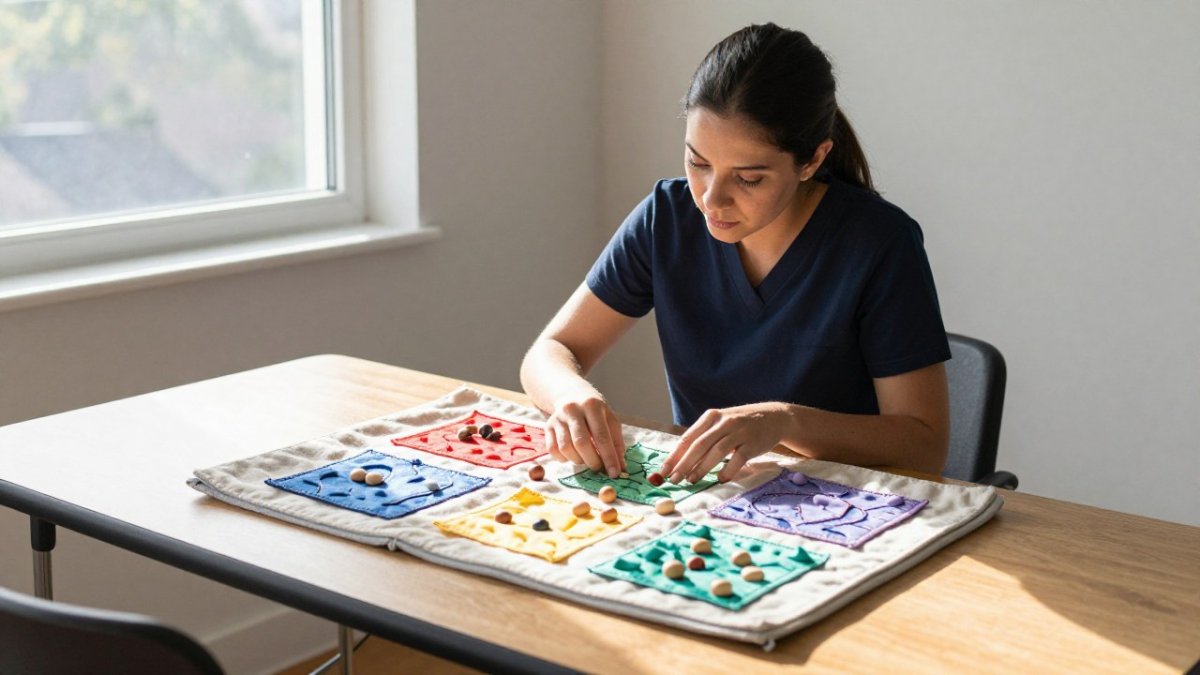
Multi-age tactile learning toys earn their place by giving different players different jobs within the same game. A younger child sorts by color, an older child runs the memory sequence, and an adult or senior keeps score or calls the pattern.
That is the design logic behind Witzkan's games: the same flannel set supports color and shape naming for a preschooler and memory recall for a grandparent, which is why we built it for ages three to 103.
Key Takeaway The test of a true multi-age game is whether the older player still has a real role. If the adult is only watching, the game is a kids' toy with a wide age label.
For classroom use, multi-age sets can also be easier to manage.
6. Price and Value: What You Pay For in Tactile Educational Games
Price in this category tracks three things: material quality, safety certification, and whether the game is mass-produced or made in small batches. A handcrafted flannel game costs more than a mass-market plastic set because materials and labor cost more, not because of branding.
Here is what each price tier typically buys you:
Lowest tier: Mass-produced plastic or thin card, minimal material disclosure, short usable life under daily handling.
Middle tier: Better materials, sometimes a stated age range, but often no certification detail and no replacement parts.
Higher tier: Disclosed materials, a verifiable safety certification, multi-age design, and construction that survives washing.
The value question is not "what is cheapest today" but "what is the cost per year of use." A game lasting five years of daily handling usually beats three cheap replacements.
How to Choose: A Buying Checklist
Use this checklist before you buy any tactile educational game:
Does the listing state the actual materials, not just "non-toxic"?
Is there a named safety certification you can verify?
Does the stated age range match the dexterity the game requires?
If a product fails more than two of these checks, keep looking.
The hardest part of buying tactile educational games is not finding options; it is finding one that survives daily handling and still engages a child, a teenager, and a grandparent in the same session. Witzkan builds handcrafted flannel games in Saegertown, Pennsylvania with a US child safety certification, an inclusive age range from three to 103, and a soft, washable construction designed for exactly that shared play.
Frequently Asked Questions
What are tactile educational games?
Tactile educational games are toys and activities designed to be explored by touch, often combining texture, shape, and color to teach skills like matching, sorting, and memory. They differ from screen-based learning because the child physically handles pieces, which builds hand strength and finger control at the same time. Many sets also support touch, sight, and hearing together, making them useful for early learning and for adults who want to keep memory and coordination sharp.
What tactile games help develop fine motor skills?
Games that require pinching, grasping, sorting, or placing small pieces build fine motor skills most directly. Look for chunky pieces, tongs and scoops, puzzle boards, and matching games with textured surfaces. Sandpaper flashcards and tactile blocks also help because they give resistance and feedback through the fingers. For children with special needs, a flannel or fabric-based game can be easier to grip than hard plastic, and the soft texture supports hand-eye coordination without frustration.
How do I choose a durable sensory toy?
Check the construction before the price. Stitching quality, fabric weight, and whether pieces are sewn rather than glued all affect how long a toy lasts. A toy described as durable sensory should list its materials and cleaning instructions, and replacement parts should be available if a piece wears out. For fabric games, look for reinforced seams and machine-washable flannel. For wooden or board games, check for smooth edges and non-toxic finishes. If a listing does not state materials, treat that as a warning sign.
Are handmade tactile games safe for children?
Handmade games can be safe when the maker follows US child safety rules. Look for a Children's Product Certificate, which shows the product was tested against federal requirements for children's products. Witzkan states its games are US child safety certified and handcrafted from soft American flannel. For any handmade toy, check for small parts that could detach, loose stitching, and whether the maker lists an age range. If a seller cannot show certification, ask before you buy.
Can tactile games support memory and coordination?
Yes. Matching games, color sorting, and puzzle boards ask players to remember where pieces belong and to place them accurately, which trains both memory and coordination. Repeating these actions over time builds finger dexterity and hand-eye coordination. Multi-age tactile learning toys add a social layer because children and adults can play together, and the conversation during play reinforces names, colors, and shapes. The benefit comes from regular, short sessions rather than one long sitting.
Explore Our Designs

Comments